

Septic Alarm Going Off? Here's Exactly What to Do (Snohomish County, WA)
Your septic alarm is sounding. Don't panic — but don't ignore it either. Most alarm events are fixable, and catching them early prevents the kind of failure that costs $15,000–$45,000. Here's exactly what to do, step by step.
Don't Panic — But Don't Ignore It
That alarm means your septic system is trying to tell you something is wrong. The good news? Most alarm events are fixable, and catching them early prevents the kind of failure that costs $15,000–$45,000 to repair.
Here's exactly what to do, step by step — and when to call a professional.
Step 1: Silence the Alarm (Immediately)
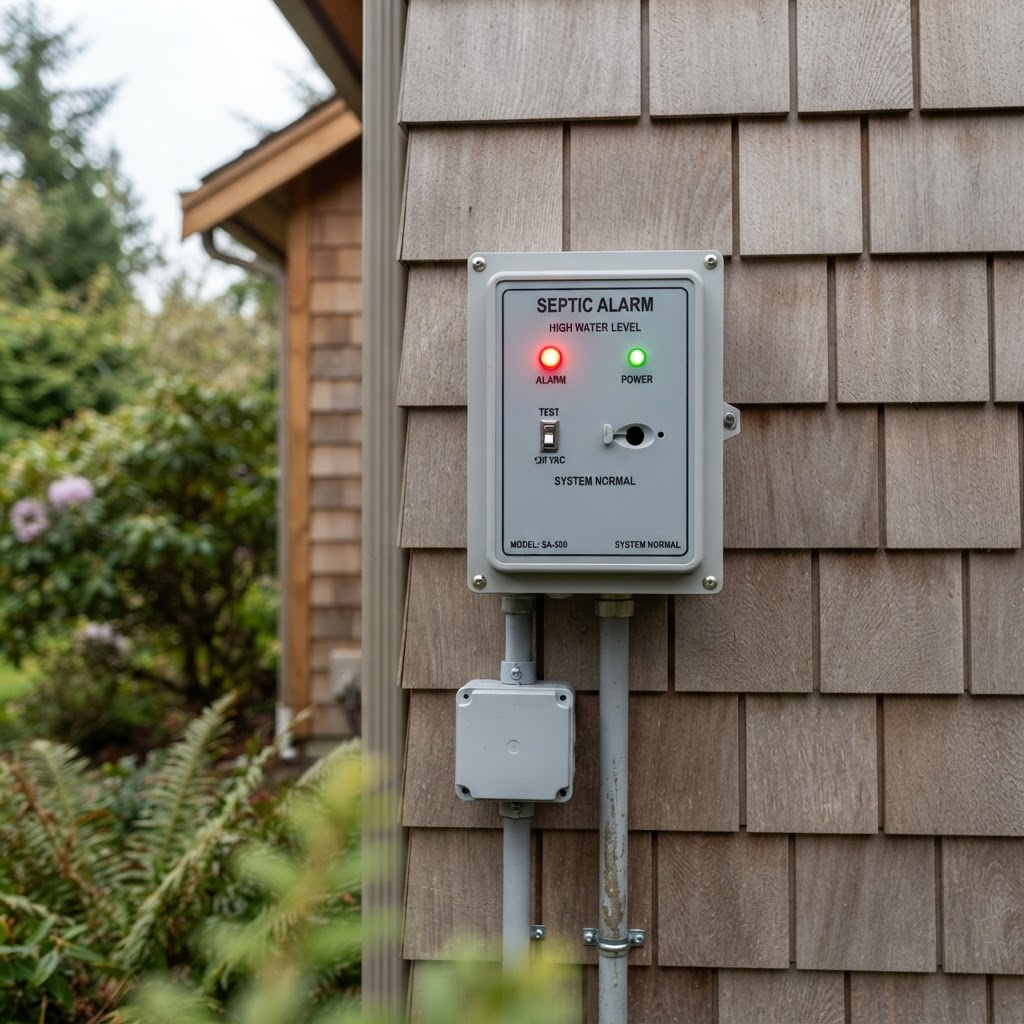
Locate your septic alarm panel — it's usually a small box mounted on the side of your house, near the septic tank, or on a post in the yard. You'll see a red light and a green light.
- Press the silence button (or flip the switch) to mute the sound
- Note which light is on — red means a problem, green means normal power
- Don't flip the breaker off — your system needs power to function
The alarm will typically reset itself if the issue resolves within 24 hours. If it keeps going off, you have a real problem.
Step 2: Reduce Water Usage (Right Now)
The most common cause of a septic alarm is high water levels in the pump tank. Until you know what's wrong:
- Stop running laundry and dishwashers
- Take shorter showers
- Avoid baths
- Don't flush anything unnecessary
Reducing water flow gives the system a chance to catch up. If the alarm resets within a few hours, you may have just overloaded the system temporarily.
Step 3: Check for Common Causes
High Water Level (Most Common) If your pump tank is too full, the alarm triggers. Causes include:
- Pump failure — the pump isn't moving effluent to the drainfield
- Float switch stuck — the switch that triggers the pump is tangled or stuck
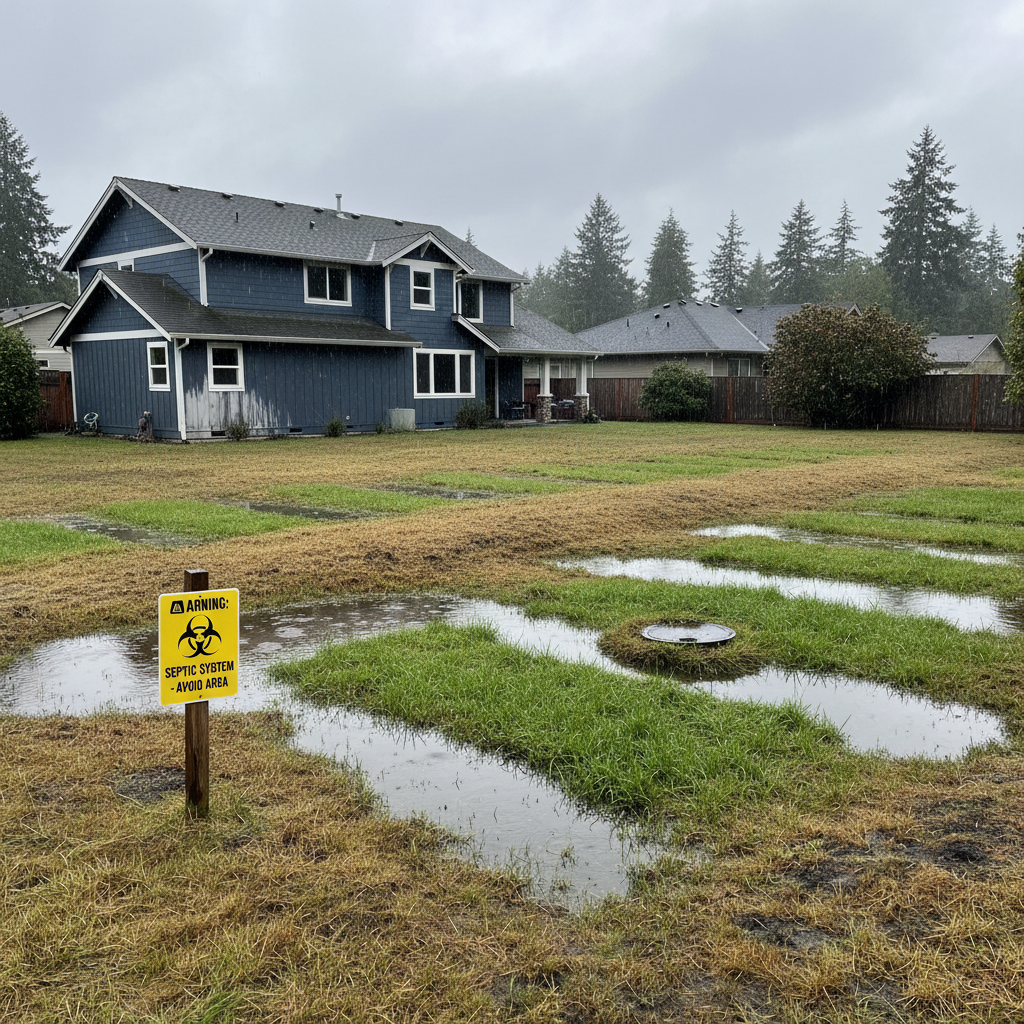
- Drainfield saturation — the drainfield can't absorb water (often after heavy rain)
- Excessive water use — too much water in a short period
Power Issues
- Check your breaker box — look for a tripped breaker labeled "septic" or "pump"
- If tripped, flip it back on. If it trips again immediately, do not keep resetting it — call a professional. This indicates an electrical fault.
- Power outage — if you recently lost power, the alarm may sound when power returns. Silence it and monitor.
ATU (Aerobic Treatment Unit) Specific If you have an ATU system, the alarm could also indicate:
- Air compressor failure — the aerator isn't adding oxygen to the system
- Timer issue — ATUs run on timed cycles; a timer malfunction triggers the alarm
- Effluent filter clogged — the filter between the tank and pump chamber needs cleaning
ATU alarms require professional attention. ATUs are complex systems with mandatory maintenance requirements in Washington State. Don't attempt to repair ATU components yourself.
Step 4: Know When to Call a Professional
Call immediately if:
- The alarm keeps going off after 24 hours of reduced water use
- You smell sewage or see wet spots in the yard
- The breaker trips repeatedly
- You have an ATU system and the alarm won't reset
- You hear grinding, humming, or clicking from the tank
- Sewage is backing up into the house
It's safe to monitor if:
- The alarm went off once and reset on its own
- You were doing a lot of laundry and it reset after stopping
- It happened during a power outage and reset when power returned
Step 5: Don't Ignore It
A septic alarm is an early warning system. Ignoring it is like ignoring a check engine light — the problem will get worse, and the repair cost will multiply.
The most expensive septic repairs come from systems that were alarming for weeks before anyone called. A $200 service call today prevents a $15,000 drainfield replacement next month.
Septic Alarm Repair Costs
- Diagnostic service call: $150–$400
- Pump replacement: $800–$2,500
- Control panel replacement: $500–$1,500
- Drainfield replacement (if ignored): $15,000–$45,000
The cost of NOT fixing it — a failed drainfield — is always more expensive than addressing the alarm early.
Prevent Future Septic Alarms
- Pump your tank every 3–5 years — a full tank overworks the pump
- Join a maintenance program — regular inspections catch issues before they trigger alarms
- Spread out water use — don't run laundry, dishwasher, and showers simultaneously
- Install a pump alarm with a backup — if you have an older system, upgrade your alarm panel
- Keep your ATU maintained — Washington State requires annual ATU inspections
- Know where your components are — tank access, pump chamber, alarm panel, and breaker location
Need Help Right Now?
Call Blackwater Services at (425) 777-4545. Same-day emergency septic service available across Snohomish, Skagit, and Island Counties. Licensed, insured, and ready to help. Book a service call online or learn about our Protection Plan for priority alarm response. If you need septic system repair, our licensed technicians diagnose the root cause before recommending any work.

Written by
Zebulun Tilton
Founder & Certified Lead Septic Technician — Blackwater Services
Zebulun has over a decade of hands-on experience in septic pumping, repair, and aerobic ATU maintenance across Snohomish, Skagit & Island Counties, WA. He holds a Washington State Contractor Registration (CCBLACKS*793NT) and is certified on all major ATU systems including Norweco, Bio-Microbics, NuWater BNR, and OSCAR XO2.
Need Septic Help in Western Washington?
Same-day service available. Licensed, insured, and women-owned. Serving Snohomish, Skagit & Island Counties.
Call (425) 777-4545Related Articles
Protect Your Septic System Today
Schedule service, ask questions, or enroll in a Protection Plan. Blackwater Services is available 24/7.
No obligation. Licensed & insured. Serving Snohomish, Skagit & Island Counties.
