
Surviving the Soak: Protecting Your Septic System During PNW Rainy Seasons
Heavy Pacific Northwest rainfall can quickly overwhelm your septic drainfield, especially in the clay-heavy soils of Skagit and Snohomish Counties. Learn how to divert stormwater and manage water use to prevent system failure during our wettest months.
The Challenge of Western Washington Soils
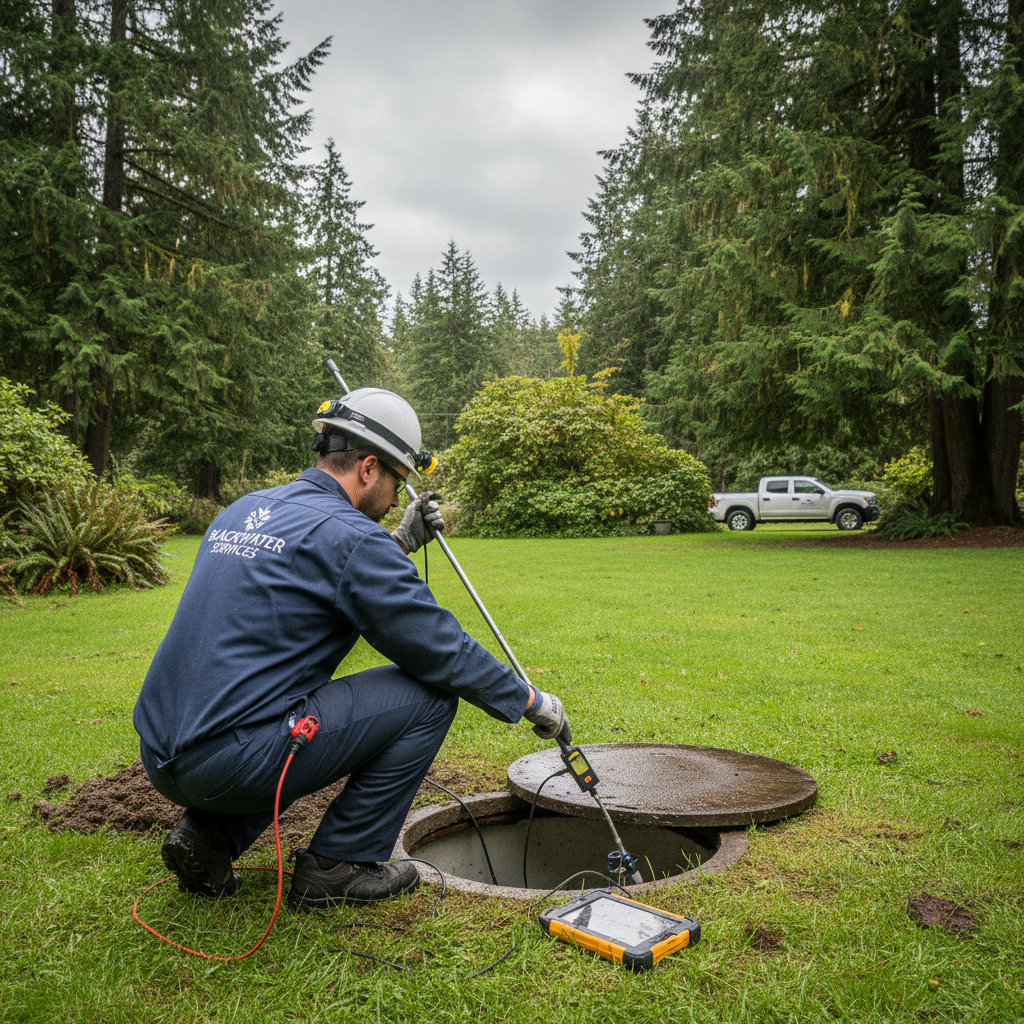
Living in Western Washington means dealing with two things: rain and clay. From the Skagit Valley down through Snohomish County, many properties sit on soil that doesn't drain particularly well. When the "atmospheric rivers" hit between October and April, the ground becomes saturated.
For a septic system, this is a critical time. Your drainfield (the area where liquid waste is filtered into the soil) can only handle so much liquid at once. If the soil is already soaked with rainwater, it can't absorb the effluent from your tank. This leads to "drowning" the system, which can cause sewage to back up into your house or pool on top of your lawn.
Diverting Stormwater: Your First Line of Defense
The most important thing a homeowner can do is ensure that rainwater stays away from the septic area. Many systems fail not because of what goes down the toilet, but because of what comes off the roof.
- Gutter Downspouts: Ensure these are piped far away from your drainfield.
- Yard Drainage: If your yard slopes toward your septic system, consider installing a French drain or a curtain drain to redirect that runoff.
- Keep it Clear: Never drive vehicles or park heavy equipment over your drainfield. Compacting the soil makes it even harder for water to filter through, especially when it’s wet.
Nitrogen Sensitivity and the Puget Sound
If you live near the shoreline in Skagit or Island County, you are likely hearing more about nitrogen pollution. Because our rainfall washes everything into the Puget Sound, WA State regulators are increasingly pushing for Advanced Treatment Units (ATUs). These systems use oxygen to help bacteria break down waste more effectively than a standard gravity tank. While they require annual maintenance, they are essential for protecting our local marine life and keeping our water safe.
Think at the Sink: The "Big Four" Killers
When the ground is saturated, your system is already under stress. Don't make it worse by introducing these common culprits:
- Flushable Wipes: They aren't actually flushable. They don't break down and are the #1 cause of pump failures and clogs in our region.
- Garbage Disposals: Using a disposal doubles the amount of solids in your tank. In the PNW, we recommend skipping the disposal entirely and composting your food scraps instead.
- Fats, Oils, and Grease (FOG): These create a hard "scum layer" that can block your inlet and outlet pipes.
- Harsh Chemicals: Excessive bleach or drain cleaners kill the beneficial bacteria that digest waste. If the bacteria die, the solids build up faster, leading to a backup.
Warning Signs of a Failing System
Keep an eye (and a nose) out for these local warning signs during the rainy season:
- Lush, Bright Green Grass: If the grass over your drainfield is much greener than the rest of the yard, even in winter, your system may be leaking nutrient-rich effluent to the surface.
- Gurgling Pipes: If your drains sound like they are gasping for air, it’s a sign that the tank or the field is full.
- Sulfur Odors: A "rotten egg" smell near the tank after a heavy rain is a clear indicator that something is wrong.
Plan Ahead for Emergencies
In our region, it isn't a matter of if it will rain, but when. The best way to avoid a midnight emergency call is to have your system pumped and inspected during the drier months.
If you’re worried about how your system is handling the current weather, Blackwater Services is here to help. We offer 24/7 emergency service for those times when the rain won't quit, and our Blackwater Protection Plan ensures you are always at the top of our list. Give us a call at (425) 777-4545 for an honest, expert evaluation of your system.

Written by
Zebulun Tilton
Founder & Certified Lead Septic Technician — Blackwater Services
Zebulun has over a decade of hands-on experience in septic pumping, repair, and aerobic ATU maintenance across Snohomish, Skagit & Island Counties, WA. He holds a Washington State Contractor Registration (CCBLACKS*793NT) and is certified on all major ATU systems including Norweco, Bio-Microbics, NuWater BNR, and OSCAR XO2.
Need Septic Help in Western Washington?
Same-day service available. Licensed, insured, and women-owned. Serving Snohomish, Skagit & Island Counties.
Call (425) 777-4545
Protect Your Septic System Today
Schedule service, ask questions, or enroll in a Protection Plan. Blackwater Services is available 24/7.
No obligation. Licensed & insured. Serving Snohomish, Skagit & Island Counties.
